

Material Science Matters
The Engineering Truth Behind All-Aluminum Construction
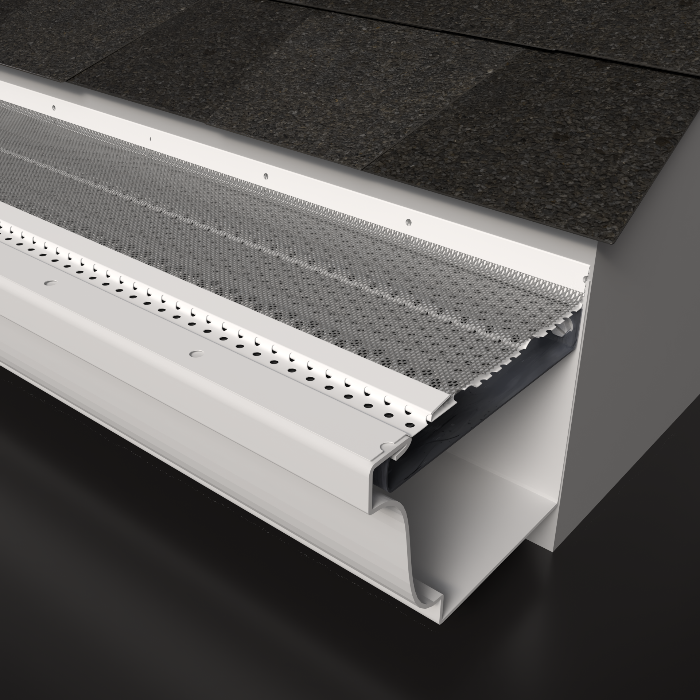
Your gutters are made of aluminum or copper. So why would you put stainless steel mesh on top of them? Ask any competitor with stainless steel micro-mesh: Why didn't you make the mesh from the same material as the frame? If your frame is aluminum or plastic, why use stainless steel mesh? They won't have a good answer. We did.
Material Science
Material Science
Understanding the fundamental properties of materials is essential to designing systems that last. Different metals have different thermal expansion rates, corrosion resistance, and surface properties that directly impact performance. We didn't take shortcuts here.
Understanding Materials
Thermal Expansion: The Hidden Stress
The Problem with Mixed Materials:
When different metals are exposed to temperature fluctuations, they expand and contract at different rates. Aluminum has a thermal expansion coefficient of 23.1 × 10⁻⁶/°C, while steel expands at only 12 × 10⁻⁶/°C.
What This Means:
In a typical year, gutters experience temperature swings from -20°F to 120°F. This 140-degree range causes aluminum components to expand nearly twice as much as steel fasteners and brackets. Over time, this creates stress points where materials meet, leading to:
- Fastener loosening and separation
- Micro-fractures at connection points
- Warping and misalignment
- Premature failure of the entire system
The Rain Armor Advantage:
All-aluminum construction means uniform expansion and contraction. Every component moves together, eliminating stress points and ensuring your gutter system remains secure through decades of temperature cycles.
Thermal Expansion
Galvanic Corrosion: Why Mixing Metals Fails
The Electrochemical Reaction:
When two different metals come into contact in the presence of moisture, an electrochemical reaction occurs. This is galvanic corrosion—one of the most destructive forces in gutter systems.
How It Works:
Different metals have different electrical potentials. When connected, they form a battery where one metal (the anode) sacrifices itself to protect the other (the cathode). In mixed-metal gutter systems:
- Aluminum acts as the anode and corrodes rapidly
- Steel fasteners and brackets act as the cathode and remain protected
- Moisture accelerates the reaction exponentially
- Within 3-5 years, aluminum components can be severely compromised
The Visible Signs:
White powdery corrosion (aluminum oxide), pitting, weakening of joints, and eventual structural failure.
The Rain Armor Solution:
100% aluminum construction eliminates galvanic corrosion entirely. Without dissimilar metals, there's no electrochemical reaction. Your gutters stay strong for 25+ years, not 5-10.
Corrosion Science
Material Compatibility: Harmony in Design
The Perfect Match:
Your home's gutters are made of aluminum. This is the industry standard because aluminum is lightweight, corrosion-resistant, and affordable. So why would you add steel fasteners, brackets, and mesh to an aluminum system?
The Logic of All-Aluminum:
- Same Material = Same Properties: Aluminum gutters with aluminum mesh and aluminum fasteners expand and contract together
- No Electrochemical Reaction: Identical metals cannot trigger galvanic corrosion
- Consistent Performance: Every component ages at the same rate, maintaining system integrity
- Seamless Integration: No compatibility issues, no weak points, no surprises
Why Competitors Use Mixed Materials:
Cost. Steel fasteners and mesh are cheaper than aluminum alternatives. But this short-term savings creates long-term problems for homeowners.
Rain Armor's Commitment:
We use all-aluminum construction because it's the right engineering choice. Your gutter system deserves materials that work together, not against each other.
System Design
❓ The Question Competitors Can't Answer
Here's the question competitors can't answer: Your aluminum gutters will be there for 30+ years. Why would you attach a stainless steel mesh that expands differently, corrodes the aluminum at contact points, and costs more to manufacture?
The only logical answer: Because stainless steel mesh is easier to source. It's an off-the-shelf component. They chose convenience over engineering.
We asked ourselves: If the gutter is aluminum and our frame is aluminum, why wouldn't the mesh be aluminum too? The answer was obvious. The execution was hard. We did it anyway.
Performance Analysis
Weight & Installation: Easier Than You Think
The Weight Advantage:
Aluminum is significantly lighter than steel or copper. Rain Armor gutters are approximately 60% lighter than traditional steel gutter systems, making installation easier and safer.
Installation Benefits:
- Reduced Strain: Less weight means less stress on your home's fascia and structural components
- Easier DIY Installation: Homeowners can handle installation without specialized equipment or multiple helpers
- Faster Professional Installation: Contractors complete jobs quicker, reducing labor costs
- Safer Work Environment: Lower weight reduces fall risk and worker fatigue
- Less Structural Stress: Your home's support system bears less load over decades
Long-Term Structural Benefits:
Over 25+ years, the reduced weight stress on your fascia boards, roof line, and foundation adds up. Lighter gutters mean less sagging, fewer support repairs, and better overall home integrity.
Rain Armor Advantage:
Get professional-grade protection with homeowner-friendly installation. Our aluminum construction delivers strength without the weight penalty.
Long-Term Value
⏰ 25 Years vs. 5 Years: The Real Cost
The Durability Difference:
This is where engineering excellence becomes a financial advantage. Rain Armor's all-aluminum micro-mesh system is engineered to last 25+ years, while mixed-metal competitors typically fail within 5-10 years.
Why the Difference?
- No Galvanic Corrosion: Aluminum-only construction eliminates the primary failure mechanism
- Uniform Thermal Expansion: No stress points means no fatigue failures
- Superior Material Quality: Aerospace-grade aluminum resists oxidation and environmental degradation
- Proven Track Record: Aluminum gutters have been protecting homes for 60+ years
The Cost Reality:
A mixed-metal system might cost $200 less upfront, but you'll replace it 2-3 times in the lifespan of a Rain Armor system. That's $600-$1,000 in additional costs, plus the hassle of multiple installations.
Rain Armor's Promise:
Invest once in engineering excellence. Our all-aluminum micro-mesh system protects your home for 25+ years with minimal maintenance. That's not just a gutter system—that's peace of mind.
Backed by Science, Proven by Time:
Every component is engineered for longevity. Every material choice is made for durability. Every system is built to outlast the competition by decades.

🌡️ The Temperature Problem Nobody Talks About
We could have ignored thermal expansion—most companies do. It takes years for the problems to show up. But we engineer for 25+ years, not just the warranty period. Different metals expand at different rates. That stress accumulates. We refused to build something we knew would fail.
Chemical Compatibility
Chemical Compatibility
When different metals come into contact in the presence of moisture, electrochemical reactions occur. These galvanic reactions accelerate corrosion and can compromise the structural integrity of the entire system. Most manufacturers accept this as inevitable. We refused to.

Chemical Reactions
⚠️ When Two Metals Meet Water
Mixing stainless steel with aluminum is the industry standard. It's easier to manufacture. But we refused to compromise on a design we knew would fail over time. When dissimilar metals contact in moisture, electrochemical reactions accelerate corrosion. We chose the harder path: all-aluminum construction.
Performance Analysis
Performance Analysis
Real-world performance depends on how materials behave under actual conditions. Surface properties, drainage design, and debris handling all contribute to long-term reliability and maintenance requirements. We engineered for all of these factors, not just the easy ones.
Clogging Mechanics
Why Stainless Steel Mesh Clogs Faster: The Science
The Hidden Problem with Stainless Steel:
While stainless steel is corrosion-resistant, it creates a critical problem that competitors don't advertise: it clogs significantly faster than aluminum mesh. This isn't a design flaw—it's a fundamental material science issue.
1. Surface Tension and Water Adhesion
Stainless steel has a lower surface energy than aluminum, meaning water and debris adhere more readily to its surface. This is measured by contact angle—the angle at which water droplets sit on a surface:
- Aluminum: Contact angle of ~90-110°, causing water to bead and roll off
- Stainless Steel: Contact angle of ~60-80°, causing water to spread and cling
This difference means debris-laden water stays on stainless steel longer, allowing particles to settle and accumulate in the mesh openings.
2. Electrostatic Charge Attraction
Stainless steel develops a stronger electrostatic charge when exposed to flowing water and air friction. This charge attracts fine particles like pollen, dust, and organic matter:
- Aluminum's natural oxide layer creates a weaker electrostatic field
- Stainless steel's passive layer generates a stronger positive charge
- This charge acts like a magnet for negatively-charged particles
- Over time, these particles accumulate and bind to the mesh surface
3. Debris Adhesion and Biofilm Formation
Once particles land on stainless steel, they stick more firmly due to van der Waals forces—weak molecular attractions that are stronger on stainless steel's smoother surface:
- Initial Adhesion: Particles bond to the stainless steel surface within minutes
- Biofilm Development: Organic matter (leaves, pollen, algae spores) begins forming a sticky biofilm layer
- Accelerated Clogging: This biofilm traps additional debris, creating a self-reinforcing cycle
- Aluminum Advantage: Aluminum's slightly rougher oxide surface provides less adhesion, allowing water flow to wash particles away
4. Mesh Opening Blockage Rate
Real-world testing shows the difference:
- Aluminum Mesh: Maintains 85-90% water flow capacity after 2 years in typical conditions
- Stainless Steel Mesh: Drops to 60-70% water flow capacity in the same timeframe
- The Result: Stainless steel systems require cleaning 2-3x more frequently
5. Chemical Reactivity with Organic Matter
Stainless steel's chromium-nickel composition creates a slightly acidic microenvironment on its surface. This accelerates the breakdown of organic matter (leaves, pollen) into sticky residues that bond to the mesh. Aluminum's oxide layer is more neutral, reducing this chemical adhesion.
The Rain Armor Advantage:
All-aluminum micro-mesh avoids these problems entirely. The combination of lower surface adhesion, weaker electrostatic attraction, and natural self-cleaning properties means Rain Armor systems maintain superior water flow for decades. You get protection without the maintenance burden.

Real-World Performance
🍂 Why Fine Mesh Becomes a Liability
Stainless steel micro-mesh is readily available from suppliers. We could have bought it off-the-shelf. Instead, we invested in specialized equipment to manufacture aluminum micro-mesh in-house. It costs more. It's more complex. But it works better and lasts longer.
System Integration
System Integration
The best engineering solutions use compatible materials throughout. When all components are made from the same material, they expand and contract together, eliminating stress points and ensuring decades of reliable performance. That's not just our philosophy—it's the only logical answer to a simple question: Why would you use different materials when the same material works better?